

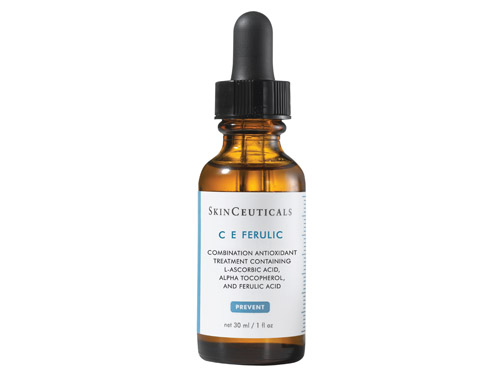
In my previous post I revisited Vitamin C based antioxidants, the various forms of Vitamin C and why, in my opinion, l-ascorbic acid is and will likely always be the gold standard form of Vitamin C. It is the only form of Vitamin C that the skin readily uses for daily protection and repair and is 100% bioavailable in the skin while other forms of Vitamin C are not. It is pivotal in the daily anti-aging skin care arsenal as it enhances the protective properties of sunscreen as well as the results of other corrective products and procedures. This makes l-ascorbic acid based antioxidants not only an ideal daily preventative but also an effective topical product for enhancing the results of other anti-aging treatments. So if you need another reason to justify the cost of your current l-ascorbic acid serum, read on.
Laser Assisted Delivery of l-ascorbic acid
When I worked in a Plastic Surgery practice this was not widely known let alone proven. We took the opposing approach and treated post-laser (non-ablative) skin very gently with nothing more than a cleanser, barrier cream and sunscreen for very sensitive skin. Why? Because inherently we knew that the skin is compromised just after a laser treatment and that anything applied immediately and during the healing process could be more irritating than if used on untreated skin.
However, thanks to pioneering research we know that the optimal opportunity for enhanced product penetration is immediately after a laser treatment. Laser treatments create channels in the treated skin known is Micro Thermal Zones (MTZs). While water and l-ascorbic acid are pulled from the skin with a laser treatment, there is a 1-2 hour window of opportunity (but the sooner the better, so why wait?) to not only replace the evaporated water and vitamin c but to also replenish the skin’s ability to heal itself better and faster.
In 1998, Drs. Alster and West documented a significant decrease in post-CO2 laser resurfacing erythema with the application of topical L-ascorbic acid in an aqueous formulation when compared with laser-treated skin that had not received topical vitamin C. Further, the application of topical ascorbic acid in a cream formulation did not result in a significant reduction in post-CO2 laser resurfacing erythema. Dermatol Surg. Mar 1998
Prior to 2012 when more recent clinical studies with positive results were published, Jill Waibel MD had been treating severe burn patients with laser treatments, which at one time was discouraged due to the fragile nature of badly burned skin. However she found that not only could laser treatments greatly improve badly burned and scarred skin, the lasers could also aid the delivery of various ingredients deeper into the skin. This enhanced penetration lead to better healing and improved results.
Concurrent to her work SkinCeuticals was testing their CE Ferulic Serum after non-ablative laser treatments with documented improved healing times, less redness and post-laser swelling along with more efficient migration of excess melanin to the skin surface for notable improvement of discoloration. This ultimately led to Dr. Waibel testing Skinceuticals CE Ferulic Serum after a fractional ablative laser treatment that demonstrated a decrease in redness, swelling and healing time along with the activation of basic fibroblast growth factor (bFGF) Lasers Surg Med. Mar 2016 This area of aesthetic practice is very exciting as it presents many unexplored opportunities to enhance delivery of topical antioxidants and other corrective products which can further enhance the results of the laser treatments. For many concerns, the ability to deliver a product topically directly to the area of need is preferable to the alternatives. With this increase wealth of clinical data we can now extrapolate the use of SkinCeuticals CE Ferulic Serum to other laser and light-based therapies from FotoFacial/IPL to fractional ablative laser treatments.
Microneedling and l-ascorbic acid
Microneedling has certainly enjoyed increased popularity in recent years but has been in existence for quite some time. Previous microneedling devices were roller-based tools that required a technician to control the depth of penetration by adjusting pressure while rolling the device across the face. Newer versions are a pen device with pre-set depth options that once selected, control the depth of penetration across the entire face which provides a more even treatment. These treatments utilize serum-based products throughout to assist in the pen “glide” across the skin as well as calming irritation and stimulating the repair process.
Many of the microneedling manufacturers sell these serums with their devices which typically include a hyaluronic acid based serum, a botanical calming serum and an l-ascorbic acid serum to be used during and after the microneedling treatments. Based somewhat on the premise of a laser treatment in that microneedling also creates micro-channels in the skin that readily absorb products immediately after the treatment, microneedling also creates an opportunity for increased absorption and improved healing and results. Therefore, it is a prime opportunity to apply an l-ascorbic acid based serum to promote healing and repair. While the micro needling companies do sell these serums with their devices, I prefer SkinCeuticals CE Ferulic Serum after micro needling rather than investing in similar products from another vendor. One additional VERY important quality for any product that is used with or immediately after micro needling is that it be a lightweight serum that does not contain silicone, parabens or other ingredients that can enter the micro channels and solidify in the skin. This can lead to the formation of granulomas and has been documented in at least one case in which 2 patients were treated with the same Vitamin C based product after micro needling http://www.ncbi.nlm.nih.gov/pubmed/24258303. Microneedling is a great anti-aging alternative to the downtime of lasers and desirable results can be seen with the addition of proven products with the treatment.
Because L-ascorbic acid based antioxidant serums can be used for daily anti-aging skincare as well as easily incorporated into post-procedure care for enhanced results, they continue to be the gold standard of anti-aging prevention and post-procedure correction.
Next week, how antioxidants differ in action from other anti-aging ingredients.
 luvvielist.com